About
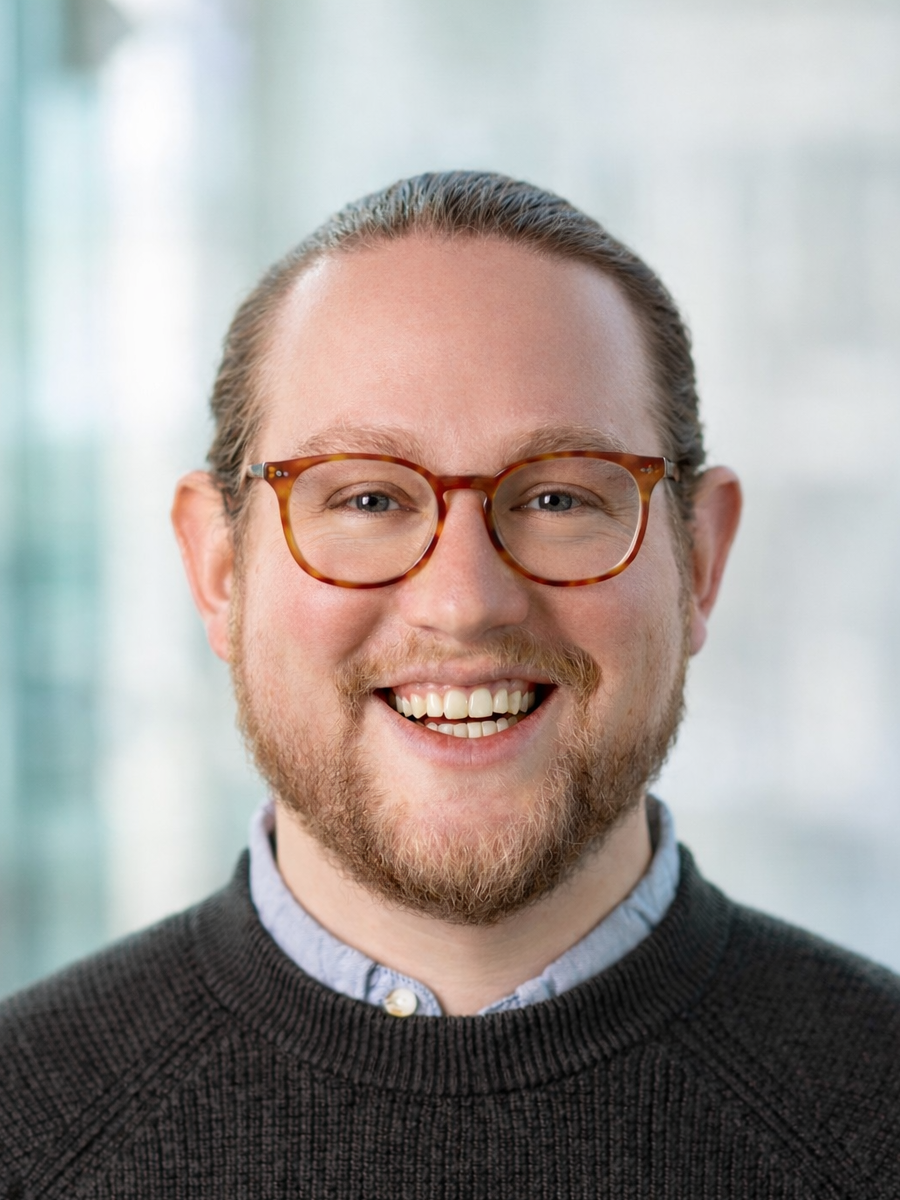
I’m a sixth-year PhD student at MIT CSAIL, co-advised by Jacob Andreas and Josh Tenenbaum. I study language models through the lens of Bayesian inference.
I am currently focused on AI for scientific discovery. I recently completed an internship with the AI research team at Edison Scientific (formerly FutureHouse) where I worked on post-training for scientific reasoning, uncertainty calibration, and experiment design. Previously, I was a senior/founding machine learning engineer at Reverie Labs, where I worked on AI for drug discovery.
My work has been published at ICLR, NeurIPS, COLM, CogSci, and Nature Human Behaviour and featured in Scientific American, MIT News, VentureBeat, Forbes, and The Harvard Crimson. My research is supported by the NSF Graduate Research Fellowship and an MIT Presidential Fellowship.
Research
My research has explored a variety of topics at the intersection of language models (LMs) and cognition. In my PhD, I:
- studied whether LMs ask good (information-seeking) questions and built game environments to model Bayesian experimental design (battleship, ICLR 2026 oral, CogSci 2024).
- introduced methods to orchestrate efficient, parallel search with LMs via sequential Monte Carlo (self-steering, COLM 2025) and pretraining + policy iteration (stream-of-search, COLM 2024 oral).
- built frameworks to steer and control LMs by writing probabilistic programs (GenLM; ICLR 2025 oral).
- invented a wake-sleep code generation loop that was a precursor to compaction (LILO, ICLR 2024) and helped develop algorithms for program compression and library learning (Stitch, POPL 2023).
Current interests:
- AI-for-science: How do we build tight discovery loops that enable teams of human & AI scientists to accelerate scientific research?
- User simulation: How can we train models to speak, write, and act in more human-like ways? How can we develop realistic, multi-turn environments that let us measure and improve human-AI collaboration?
- Cognitive and psychological impacts on humanity: Over the next 10 years, how will daily interaction with advanced AI systems shape our cognitive capabilities, psychology, and mental health?
Publications
Open the full publications page
News
- Summer 2026: I worked with the AI research team at Edison Scientific on post-training for uncertainty calibration and experimental design.
- February 2026: “Shoot First, Ask Questions Later?” was accepted as an oral presentation at ICLR 2026.
- December 2025: Self-Steering Language Models was featured by MIT News.
- October 2025: Self-Steering Language Models was presented at COLM 2025, and I gave an invited talk at the Visions of Language Modeling workshop.
- April 2025: “Syntactic and Semantic Control of Large Language Models via Sequential Monte Carlo” was presented as an oral spotlight at ICLR 2025.
- September 2024: Stream of Search was accepted for an oral spotlight presentation at COLM 2024.